





Practice Areas

Our Florida-based medical malpractice team handles birth injuries, cerebral palsy, anesthesia errors, surgical errors, failure-to-diagnose, and misdiagnosis cases — cases where the consequences are catastrophic and the evidence has to be built brick by brick. Every case gets the same preparation standard, no matter the size.

Hands reviewing medical records on a wood desk — the evidence behind every malpractice case

What practice areas does the Miami medical malpractice firm handle?

Our Miami practice focuses exclusively on medical malpractice across six focus areas: birth injuries, cerebral palsy, anesthesia errors, surgical errors, failure-to-diagnose (especially cancer, cardiac events, and sepsis), and wrong-diagnosis cases. Medication errors and wrongful-death matters arising from medical negligence also fall inside our caseload — all under Florida's Chapter 766 framework.

The Stakes

Deaths per year in the United States from preventable medical error.

A 2016 Johns Hopkins study placed medical error third in U.S. mortality, behind only heart disease and cancer. These cases exist because the law recognizes providers owe patients a specific standard of care — and when they fall below it, the patient carries the cost. Our job is to prove it.

The Scale

Diagnostic error alone affects 1 in every 20 U.S. adults.

Beyond the 250,000 mortality figure, diagnostic error affects over 12 million U.S. adults each year. Roughly 800,000 Americans die or suffer permanent disability annually from missed, wrong, or delayed diagnoses — conditions the law expects a reasonably competent provider to identify.

12M
Annual U.S. diagnostic errors
1-in-20
Adult patients misdiagnosed yearly
800K/yr
Deaths or permanent disability from diagnostic error
Practice Area Detail

A closer look at each focus area — what counts as a case, who gets harmed, and how Florida law shapes what you can recover. Each practice area links to a dedicated page with further detail.

Birth Injury — when delivery goes wrong

Birth injuries happen in roughly 6 to 8 out of every 1,000 live births in the United States, but the consequences — hypoxic-ischemic encephalopathy (HIE), cerebral palsy, Erb's palsy, brain bleeds, spinal cord injury — can define a lifetime of care. The cases we see most often involve delayed C-sections after non-reassuring fetal heart tracings, misuse of forceps or vacuum extractors, failure to diagnose preeclampsia or gestational diabetes, or missed signs of umbilical cord compression.

Under Florida law, birth-injury claims have an extended window: in most cases, a claim can be filed until the child's eighth birthday, and damages often include lifetime medical care, specialized education, rehabilitation, assistive equipment, and future lost earning capacity. These cases require pediatric neurology, obstetrics, and life-care-planning experts — which is why general-practice firms rarely handle them well.

Miami Birth Injury Lawyer → · Read the birth-injury research →

Cerebral Palsy — usually a birth-injury story

About 1 in 345 American children lives with cerebral palsy, and a substantial subset of those cases traces back to an identifiable delivery event: oxygen deprivation during labor, untreated maternal infection, delayed response to fetal distress, or improper use of delivery tools. When the facts fit, a cerebral-palsy case can recover the full lifetime cost of care — often running into the millions for 24/7 nursing, physical therapy, adaptive equipment, accessible housing, and specialized education.

Proving causation is the hard part. The defense will argue the CP was genetic or congenital. We counter with the fetal-heart-tracing record, cord-gas analyses, MRI patterns consistent with perinatal hypoxia, and expert neurology testimony that ties the delivery event to the specific pattern of brain injury.

Miami Cerebral Palsy Lawyer → · Read the cerebral-palsy research →

Anesthesia Errors — small mistakes, catastrophic consequences

Anesthesia is one of modern medicine's most perfected disciplines — which makes the errors that still slip through uniquely preventable. We see cases involving failed intubation, dosing errors, failure to adjust for body weight or prior conditions, inadequate monitoring of vitals under sedation, and delayed recognition of respiratory arrest. The harms include hypoxic brain injury, cardiac arrest, aspiration pneumonia, dental injury, nerve damage from improper positioning, and death.

Proving an anesthesia case requires anesthesiology experts willing to criticize their peers — and thorough analysis of the anesthetic record, which is often captured second-by-second on modern monitors. We subpoena the raw monitoring data and reconstruct the timeline to show exactly when the deviation occurred.

Miami Anesthesia Error Lawyer → · Read the anesthesia-errors research →

Failure to Diagnose — when a provider misses what was there

“Failure to diagnose” is legal shorthand for three overlapping scenarios: the provider missed the condition entirely, the provider reached the correct diagnosis too late, or the provider failed to order the test or referral that would have produced the diagnosis. Cancer, cardiac events, sepsis, pulmonary embolism, and stroke dominate this category because they all progress fast and because the standard of care is well-documented in clinical guidelines.

The damages depend heavily on what a timely diagnosis would have changed. Our work is to establish what the standard-of-care workup should have been, what it would have shown, and how the different treatment pathway would have changed the medical outcome. One of our firm's signature results — $2.5 million for a missed renal cell carcinoma — turned on exactly that reconstruction.

Miami Failure to Diagnose Lawyer → · Read the failure-to-diagnose research →

Wrong Diagnosis — when a provider treats the wrong thing

Misdiagnosis is the other side of the diagnostic-error coin. Instead of missing the condition, the provider identifies the wrong one and initiates treatment for a disease the patient doesn't have. The result is typically two layers of harm: the underlying condition continues untreated, and the unnecessary treatment introduces its own risks (medication side effects, radiation, surgery). Cancer, autoimmune disease, and cardiac events are the most commonly misdiagnosed categories.

A Journal of Clinical Oncology study found that up to 28% of cancer cases receive an initial misdiagnosis. These are case-specific: the strength of a claim depends on whether a reasonably competent provider would have reached a different conclusion given the same presenting symptoms, imaging, and history.

Miami Wrong Diagnosis Lawyer → · Read the wrong-diagnosis research →

Surgical Error — when the operating room goes wrong

Surgical errors split into two categories: technical failures during the procedure itself (wrong-site surgery, retained instruments or sponges, nerve or blood-vessel injury, improper patient positioning) and judgment failures that shape whether and how the procedure is performed. The highest-frequency cases we see involve bile-duct injuries during laparoscopic cholecystectomy, bowel perforations in laparoscopic and colonoscopic procedures, and ureteral injuries during pelvic surgery.

Proving a surgical-error case turns on the operative report, the intraoperative imaging, and whether the surgeon deviated from accepted technique. Florida's expert-qualification statute (§ 766.102) requires testimony from surgeons in the defendant's exact specialty — our firm has recovered seven figures across bile-duct, laparoscopic, ureteral, and bowel-injury matters.

Miami Surgical Error Lawyer → · Read the surgical-errors research →

Florida Procedure

What makes a Florida medical malpractice case different

Florida medical malpractice is not ordinary personal injury. The legislature has built specific procedural hurdles into Chapter 766 of the Florida Statutes — hurdles designed to weed out frivolous claims but that also trip up plaintiffs whose lawyers aren't familiar with them. These are not pro-forma steps; missing any one can end a valid case before it starts.

Pre-suit investigation and notice

Before filing a malpractice lawsuit in Florida, you must complete a 90-day pre-suit investigation and serve a Notice of Intent on each prospective defendant. During this period, the defendants have an opportunity to investigate the claim, and the parties can exchange informal discovery. The pre-suit period tolls (pauses) the statute of limitations while it runs.

Failure to serve proper notice, or filing a claim without completing pre-suit, can result in dismissal — even on an otherwise-strong case.

Corroborating expert affidavit

Florida law requires a pre-suit affidavit from a qualified medical expert corroborating that there are reasonable grounds to believe medical negligence occurred. The expert must practice in the same specialty as the defendant and meet the statutory qualification thresholds (§ 766.102, Fla. Stat.). Finding, qualifying, and briefing the right expert is one of the highest-leverage tasks in malpractice practice — and one of the easiest places for a non-specialist firm to stumble.

Damages caps — and why they don’t apply anymore

Florida previously capped non-economic damages (pain and suffering, loss of life's enjoyment) in medical malpractice cases. The Florida Supreme Court ruled those caps unconstitutional in 2017 (North Broward Hosp. Dist. v. Kalitan). Today, there are no practical caps on non-economic damages in a Florida medical malpractice case — which fundamentally changes the value of catastrophic-injury cases, especially birth injuries and wrongful-death matters.

The discovery rule and the statute of repose

Florida medical malpractice plaintiffs have two years from the date they knew or reasonably should have known about the injury — and a hard four-year statute of repose from the date of the negligent act, regardless of when the injury was discovered. Fraud or intentional concealment can extend the repose window to seven years. For minors, the rules are different: a claim can be filed up to the child's eighth birthday.

0Injury date
2 yrsStandard
From the date of discovery
4 yrsMaximum
Statute of repose window closes
7 yrsException
Fraud or concealment extension

These are strict deadlines, and the discovery-rule analysis is fact-intensive. A consultation should be the first step, not the last.

Trial Posture

We try cases.

Insurance carriers and hospital systems know our name. That reputation lets us negotiate from strength — because every defendant knows we’ll take the case to a Florida jury if the offer isn’t right.

Case Construction

How we build a medical malpractice case

From the first call to verdict or settlement, these are the four stages every case moves through — and what happens at each one.

01

Intake & Triage

A short confidential conversation to understand what happened, confirm the statute-of-limitations posture, and identify whether the facts plausibly support a claim. No case is accepted without this review.

02

Record Reconstruction

We request and analyze every medical record, imaging study, lab result, and provider note. Board-certified experts are retained to evaluate the standard of care, causation, and damages against the documented clinical timeline.

03

Pre-Suit & Filing

Notice of Intent served, corroborating expert affidavit prepared, and the 90-day pre-suit investigation completed. If the case survives that process, we file and enter the formal discovery phase.

04

Settlement or Trial

Most cases resolve once discovery has exposed the defense’s position. When settlement offers don’t reflect the full value of the losses, we try the case — and our preparation means insurers know that’s a real threat.

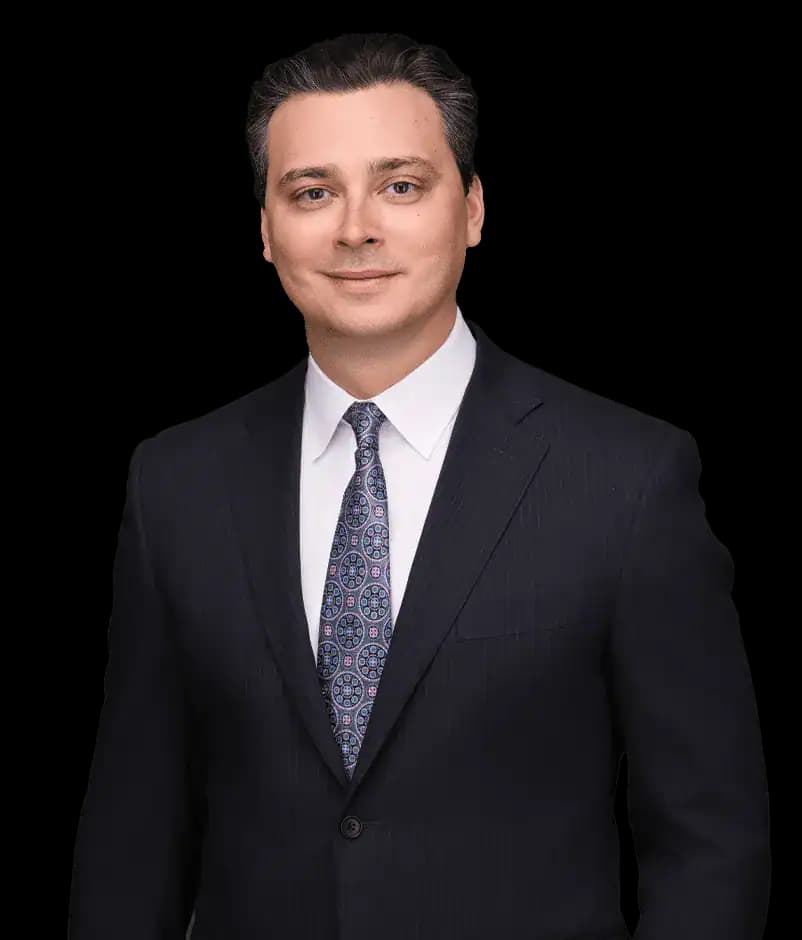
Adam J. Zayed, founder and managing trial attorney at Zayed Law Offices
Meet Your Attorney

Adam J. Zayed

Founder & Managing Trial Attorney — Zayed Law Offices

$150M+Recovered for Clients
100%Illinois Appellate Win Rate
15+Years in Trial Practice

Adam J. Zayed is the founder and managing trial attorney of Zayed Law Offices. He has recovered more than $150 million for injured clients and represented plaintiffs in billion-dollar mass tort litigations.

He carefully limits his caseload so every case receives the attention, craft, and strategic development needed to fully articulate each client’s losses — building cases brick by brick through statistics, strategy, and behavioral science.

Education

  • Juris DoctorNotre Dame Law School
  • MBA (Dean’s List)University of Chicago Booth School of Business
  • Bachelor’s, High HonorsLoyola University Chicago
  • Bar AdmissionsIllinois · Florida (national practice)

Honors & Associations

  • Top 40 — The National Trial Lawyers (Civil Plaintiff)
  • Top 25 Medical Malpractice Trial Lawyers
  • 10.0 Avvo Rating — Top Attorney
  • Super Lawyers 2025
  • Best Lawyers in America
  • Million Dollar Advocates Forum
Recognition

Credentials that only come with sustained results

Beyond a wall of logos: the selective, peer-reviewed distinctions that define a top-tier trial practice.

2024

Top 25 Medical Malpractice Trial Lawyers

Selective national honor reserved for attorneys delivering top-tier verdict outcomes in medical negligence cases.

The National Trial Lawyers
2025

Super Lawyers

Peer-reviewed distinction awarded annually to no more than 5% of attorneys in a state — recognizing achievement and peer respect.

Thomson Reuters
Member

Million Dollar Advocates Forum

Among the most prestigious groups of trial lawyers in the U.S. — membership limited to attorneys who have won million- or multi-million-dollar verdicts and settlements.

Million Dollar Advocates Forum
10.0

Top Attorney · Avvo

Highest possible peer-reviewed rating from Avvo, reflecting experience, industry recognition, and professional conduct.

Avvo Rating System
Client Voices
Their dedication and hard work really show. I highly recommend this firm to anyone looking for trustworthy and reliable legal help.
FAQ

Frequently Asked Questions

Common questions we hear from prospective clients weighing whether to call. Need more? Call 305.916.6455 — consultations are free.

Free Consultation

Get your free case evaluation today

Do you think you have a medical malpractice case based on an injury caused by a healthcare provider that occurred in Florida?

Miami skyline near our office
Location

Find Us

Miami Medical Malpractice Lawyers
804 NW 21 Terrace, Suite 205
Miami, FL 33127

Call 24/7305.916.6455

Get Directions